Financial Analysis on medical assets
- Passing yield - yield over the total development cost - propensity to risk
- Dictates what the market is willing to pay
- total development cost - how much you are willing to put on the line
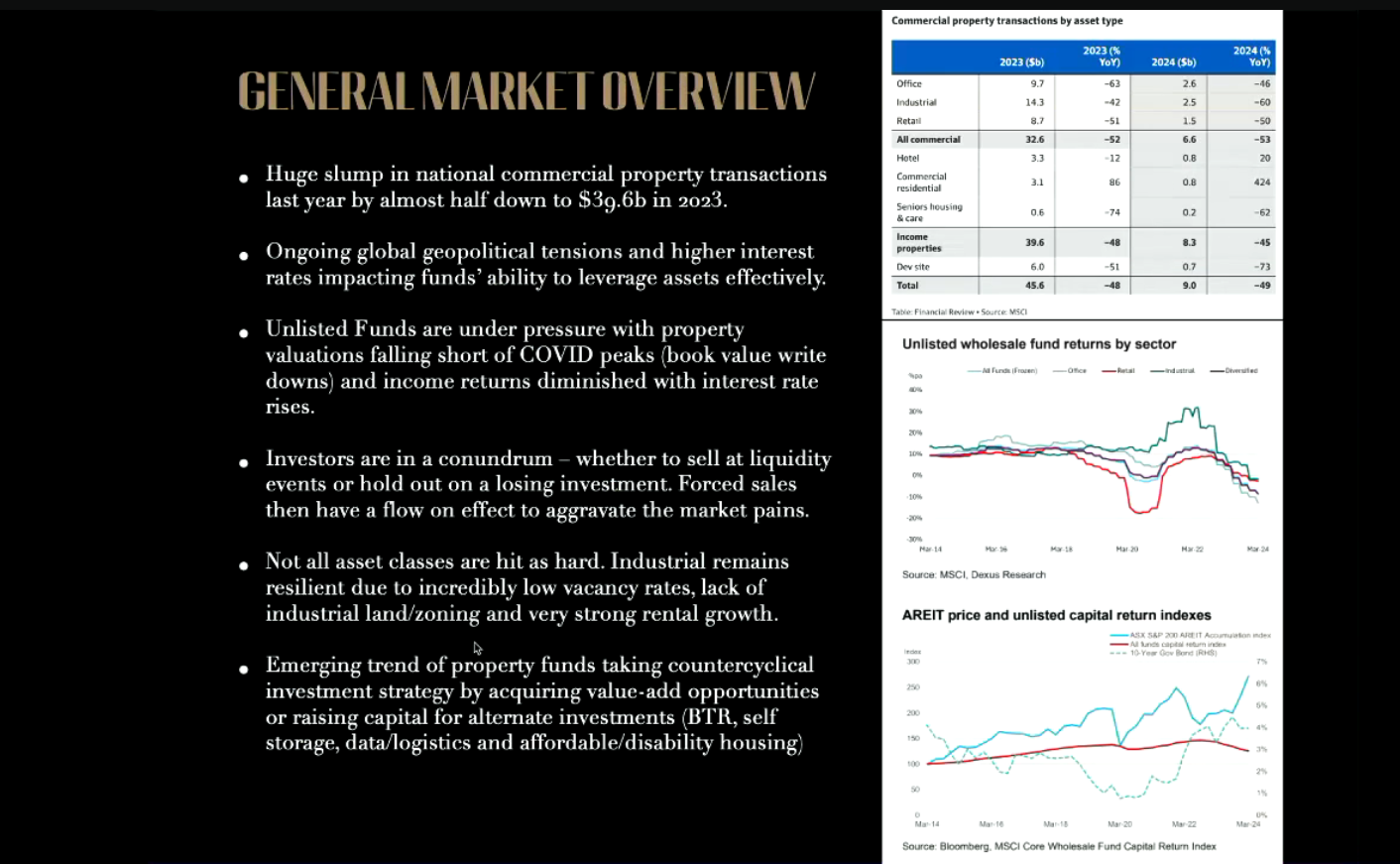
Ongoing political tensions has an overall impact on consumption
- discretionary spending has slumped
working out whether to sell or hold on to assets
- QIC buy aggressively in tough times
Alternate investments:
- Build to rent, affordable housing, self storage
Healthcare:
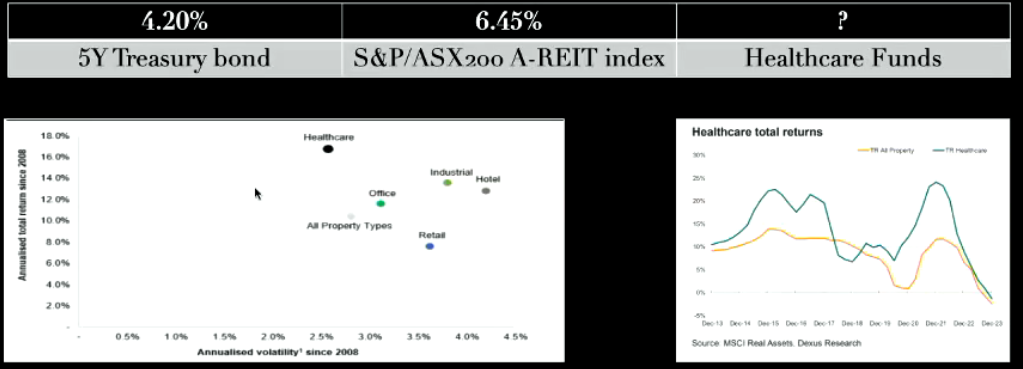
- Usually underpinned by strong medical covenants, long WALEs, diversified asset class
- within the assets, leases are backed by really strong tenants
- Considerations that underpin the sector demands include - growing/aging populations, exposure to chronic diseases, growing preventative care focus, undersupply of medical facilities, government subsidies and employment growth
- medical, broad umbrella with what the funds seek
- Attractive risk/return profile given high level of resilience through economic cycles, non-discretionary positions within the economy
- ambulance wait times, hospital beds within area
- need to factor in to long term viability of development
- investment into healthcare per capita
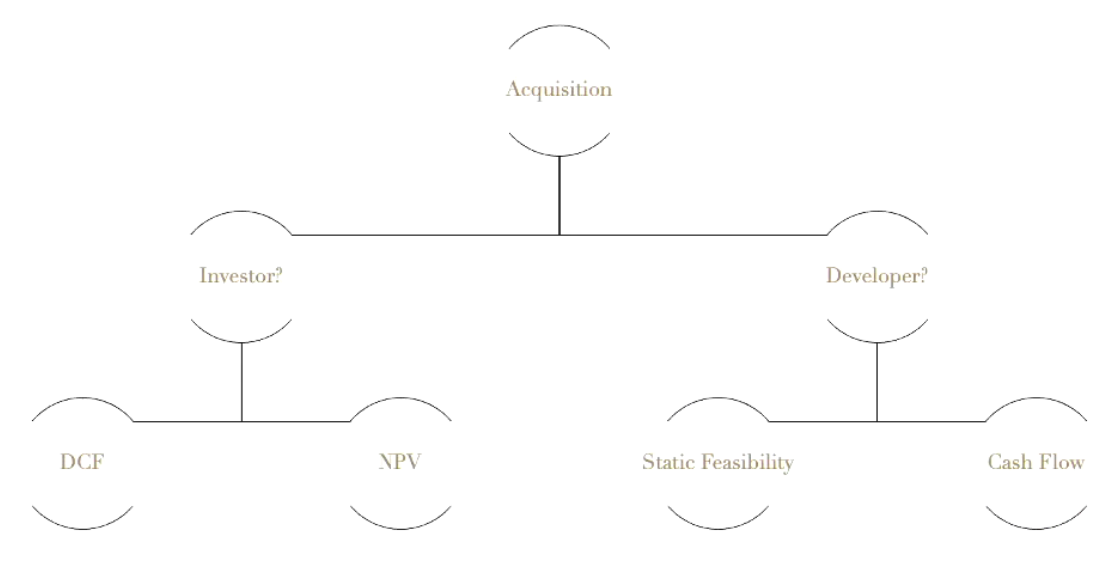
- intention is to develop and sell
- investor will take a longer term approach
- assumption into the life of the asset
- hold into a fund and pay
Case study: Robina Lifestyle + Medical
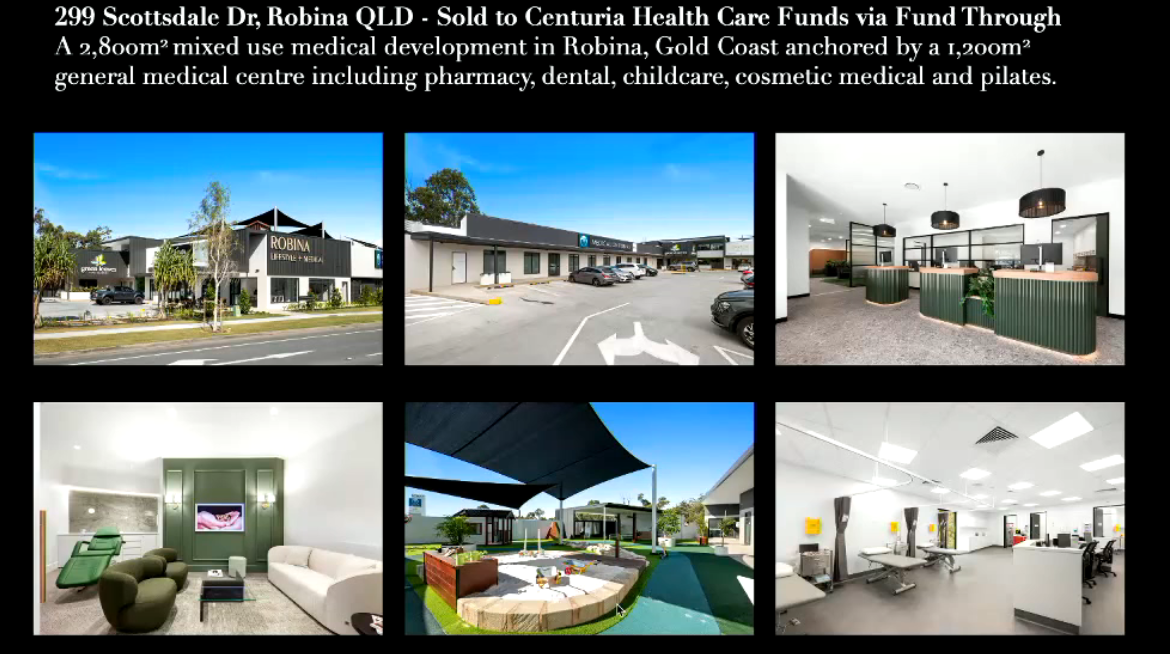
Property Summary
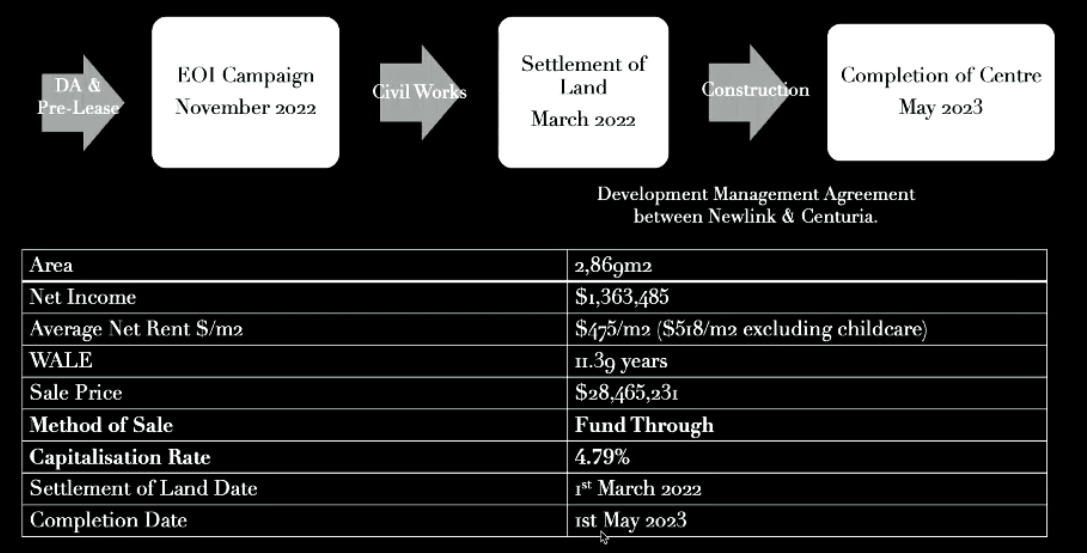
- develop it and sell on completion
- DA to pre-let
- capital intensive fitouts - long lease agreements
Medical Rents
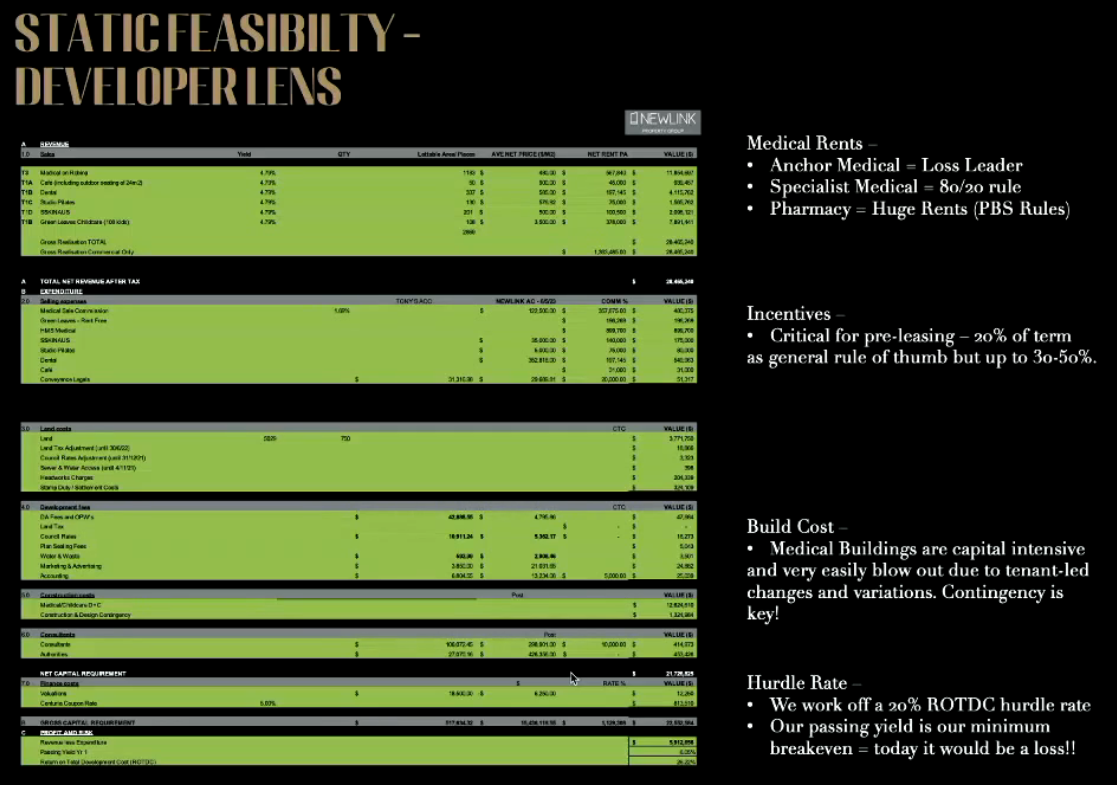
- specialty vs anchor - need to secure anchor medical
- Attractor to specialist medical
- secure anchor medical, typically the loss leader
- position specicalist medical, 20% of the floor plate but contribute to 80% of the profit
- Pharmacy - yield big marks in assignment, highly regulated with PBS rules
- High requirements to get a pharmacy, up to $1100/sqm
- Cannot be within 300m of another Pharmacy
- Highest and best purpose
Incentives
- for pre-leasing
- fitouts, for radiology
- rent-free, cash, or you do the work
- High face rent?
Build cost
- Sprinklers and basements have large impacts on the build cost
Return on total development costs - typically 20%
Passing yield - 4.79% cap rate
- medical asset in Ipswitch actively advertised for 8%
Tenancy mix:
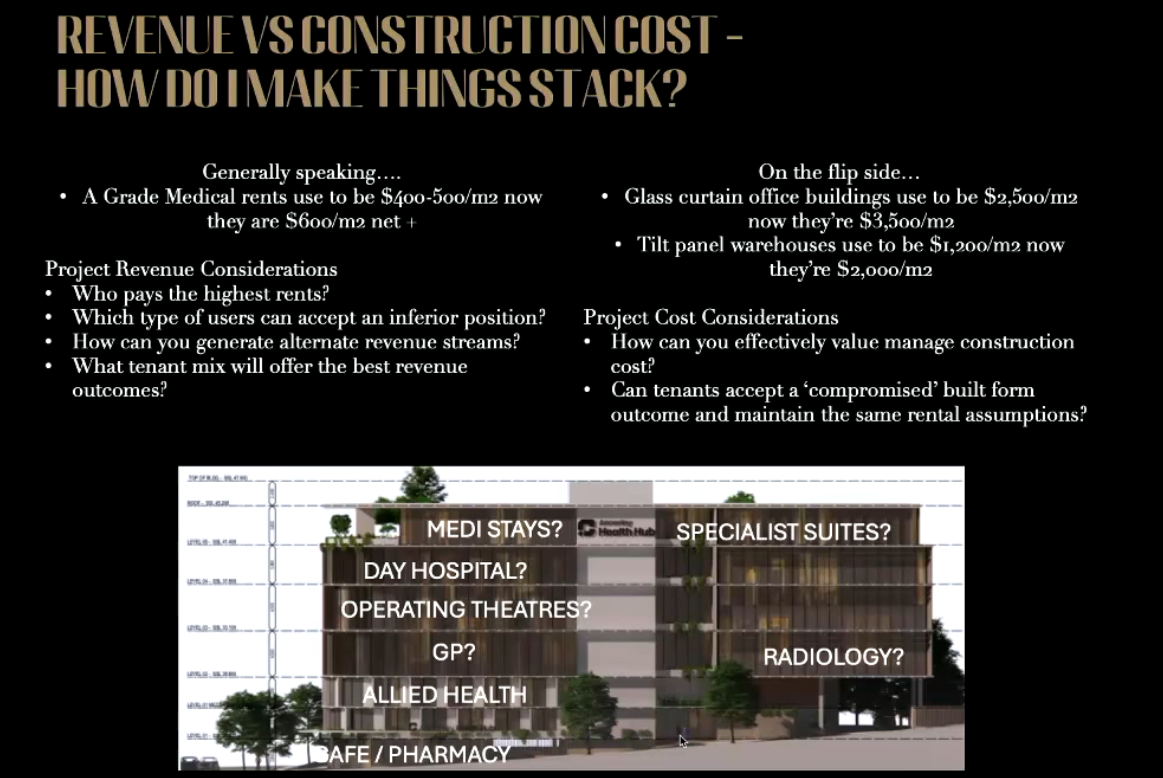
- Pharmacy will want the pole position
- Who can take B, C and D grade locations
- What do you need for the project to succeed?
- lease to a solar panel company
Centuria Healthcare Unlisted Funds
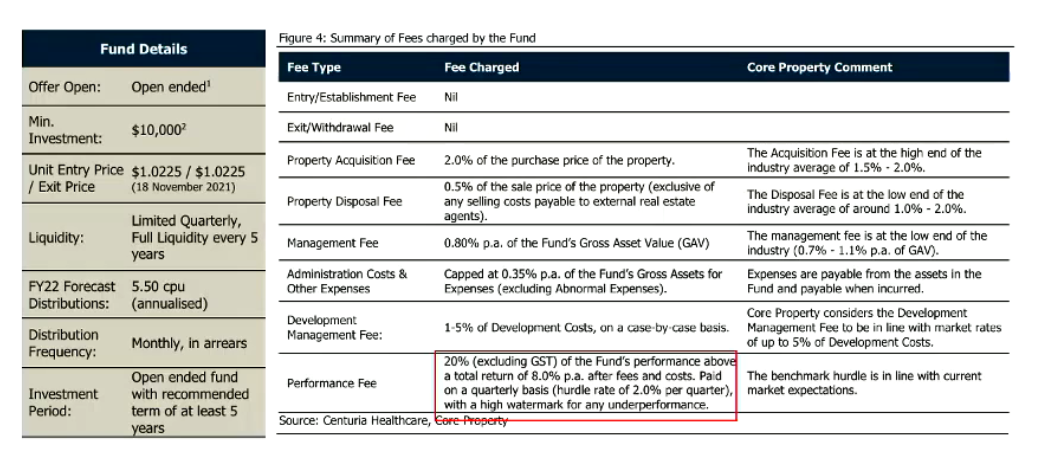
- assumptions of the fees you want to take as a fund
- hurdle rate, 8% as a minimum
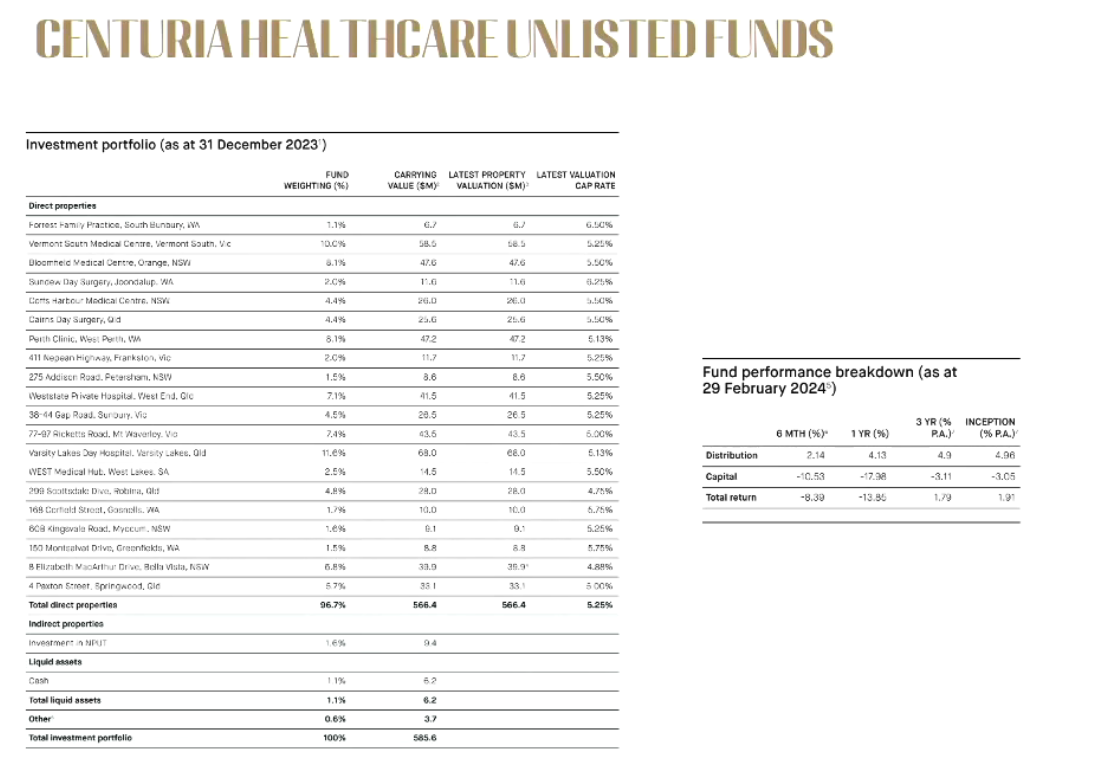
- every half year, will re-value their asset to determine capital growth/value
- distribution, income stream the asset generates
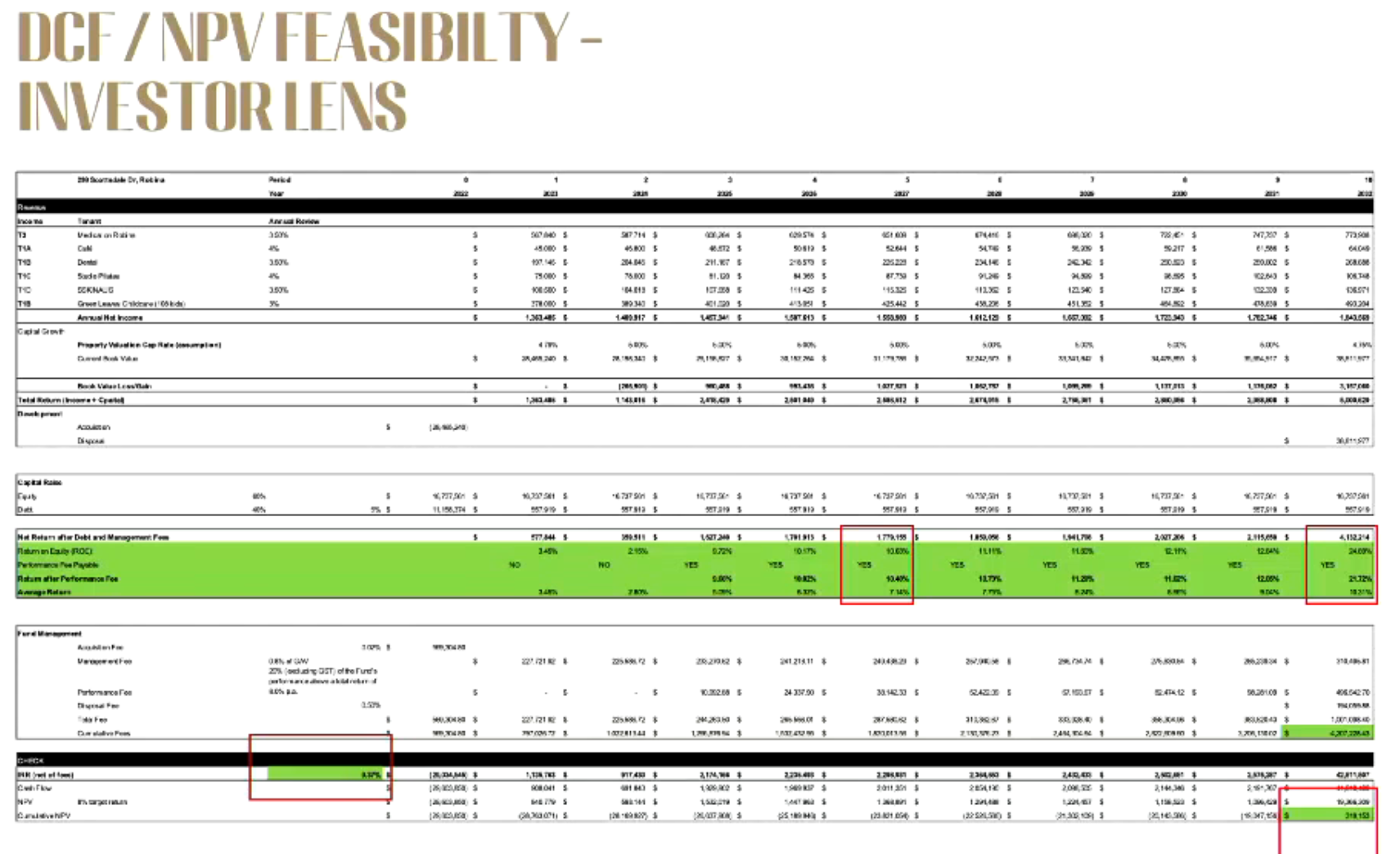
Net Rents
- Commercial leases will have a rent review embedded in them - CPR, Cap/collar
- For medical assets, have a rachet clause, greater of CPI or 4% e.g.
- Income should grow year on year
- Take into account vacancy periods (ignored in his examples)
- Cap out each year revenues to
Cap rate of 4.75 but returns of 10%? Blended income return and capital growth over the period of time
Loans and LVR covenants
- 40% of the capital will be raised by debts
- Cost of debt associated with that - 5%
less management fees - will
- acquisition fee
- exit fee
- performance fee - perform over 8% will have a clip as well
How much are you willing to pay?
- IRR
- terminal value -
Construction
- bucket of contigency for development
- Banks want a 5% contingency bucket
- sensitivity analysis for how much the
Consideration
- operational works, road shutdowns
- permits to shut down roads and permit for upgrades
profit risk rate - 30% -