Corporate Real Estate
Outline
- Overview of the role and function of Corporate Real Estate
- Outline the relationship between real estate strategy and business strategy
- Overview of the decisions making framework to determine if a business should buy or lease real estate
Corporate Real Estate
Portfolio Management
- Investment
- Return on Investment
- Diversification
- Sector
- Location
- Risk Management
- Modern Portfolio Theory
Corporate Real Estate is the use and occupation of property
- Professional level of undertaking acting for or part of an entity that consumes or uses real estate
- e.g. use of outsourcing parking meters, security, cleaning
- What you outsource and insource impacts your property requirements
CRE & Facilities Management
- ‘Facilities Management is responsible for co-ordinating all efforts related to planning, design and managing buildings and their systems, equipment and furniture to enhance the organisations ability to compete successfully in a rapid changing world’
– Becker, F
who is doing repairs, maintenance,
- what is your maintenance strategy? preventative, maintenance, etc.
- e.g. preventative, change the lights frequently so they don't break down
Real estate is a wasting asset
- deteriorates and diminish over time
- building become obsolete
- biggest depreciator of built form: water
Need to decide how you are going to handle the waste: destroy it? maintain it?
Facilities Management Process
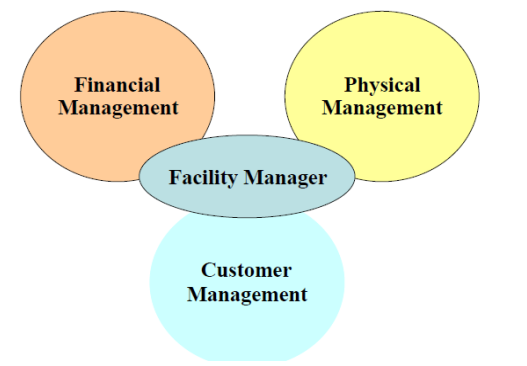
- Physical Management: What are my warranties, am I getting income from a tenant
- Customer Management:
Strategic Asset Management
- Asset strategic planning is defined as the process of developing management strategies that will:
- contribute to the best utilisation of assets in the delivery of services to the community in line with corporate plans and service delivery strategies.
- ensure ongoing compatibility between the composition of an asset portfolio and the changing environment within which it operates.
- It is an ongoing management process.
- The development of asset strategies through analysis and direction-setting processes provides a basis for compiling asset strategic plans, and disposal, capital, maintenance and management-in-use programs formalised through the annual budget process.
corporate real estate get early into the lifecycle of buildings
- Facilities management - it has been built, occupied and need to be maintained
- the most economically efficient way to handle the property
- Accounting
- Architecture
- Real estate professions
- Environment/CSR
- Legal
- Market Research
- Business Objectives
IMPORTANT:
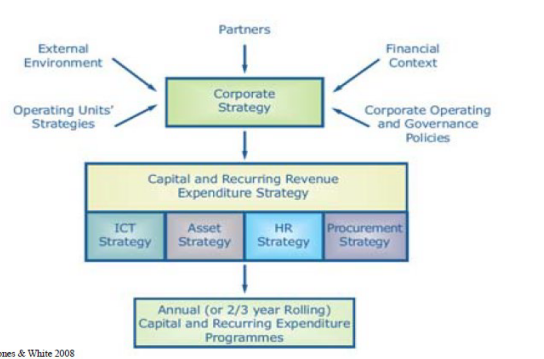
Once you have a business, you should have an IT, HR strategy, etc
- your procurement strategy will influence your asset strategy, whether you need offices e.g. in a region or space
- Gestation period of a property decision is very long, sign up to long leases e.g.
- Sometimes the asset strategy locks in the corporate strategy, sometimes badly
Asset management Process
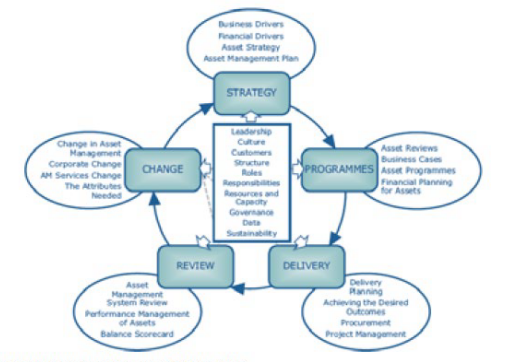
Changing perception of property
Generally the second largest expense of companies
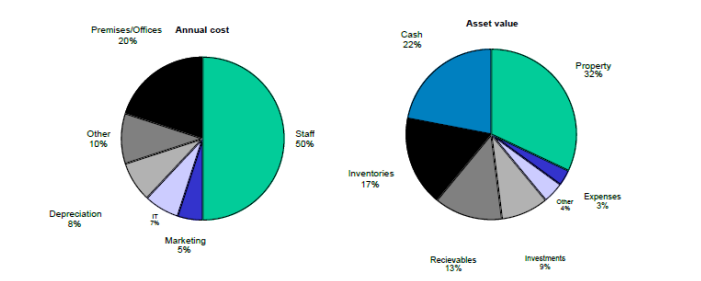
-
The separation of capital and recurrent costs for budgeting purposes militates against a whole- of-life approach to asset management. Assets purchased with capital funds once approved, are treated effectively as ‘free’ goods in subsequent years so there is little ongoing incentive to ensure service potential is optimised.’
-
ANAO
-
Property as “A FREE GOOD”
- Historic way of thinking
- Often seen in Public Authorities and long term property owners
- Doesn’t properly allocate cost of capital
Governments are really bad at this - treat property as a 'free good'
- have a property asset that has been paid off, and don't factor in cost of property treat it as a free good in the cash flow model
- put better assets onto a property which might be better for something else Don't think about the asset properly
- Do not allocate the cost of capital properly
-
Corporate Property Research
-
Avis Gibson Watts
- more than half the organisations had 30% or more of their total assets value in property
- 40% Public Sector / Private Sectors 20% have detailed policies and procedures for management of property
-
IDRC - ‘Corporate Real Estate 2000’
- Like Cinderella before the ball, corporate real estate holdings have often been overlooked by senior managers as they strive to structure their firms and reengineer their work processes. But now, all parts of the firm are required to cut costs; all operational units are required to enhance business flexibility and otherwise add value to the core business. Under- management of corporate real estate is no longer acceptable.’
Iterative relationship
- should relate to them and adapt to them, corporate strategy is hard to move once it is in place.
Where does Real Estate fit in?
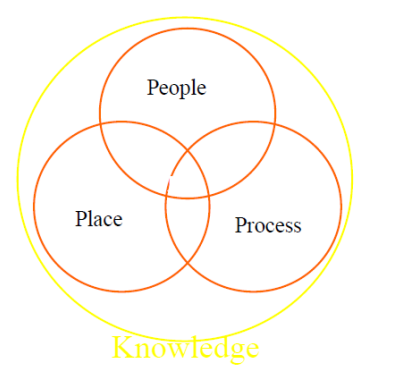
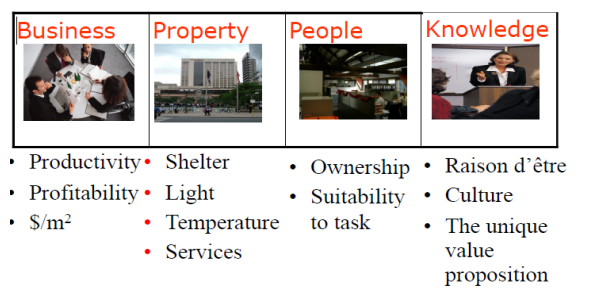
- Sense of ownserhip when you have a good place, can drive culture
- How does this provide a unique value proposition for a company
- Should be an enabler for a business
Facilities Management Process
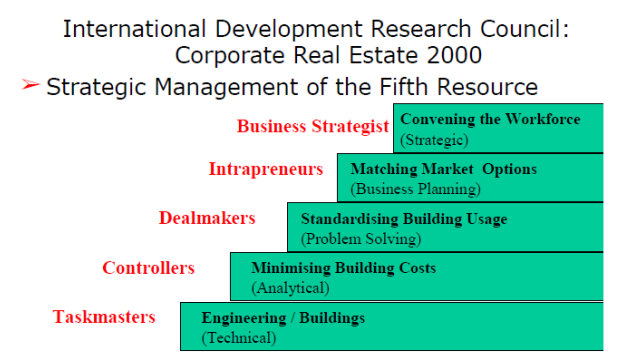
- Value-adding layers
- Property strategy and business strategy are aligned
Strategic Real Estate Planning
- Supporting business strategy by:
- leveraging locations,
- layouts
- leases
- reduce costs
- increase flexibility and
- improve productivity.
- want to be on the road on the way home, versus on the road on the way to work (for a fast food, eg.g)
- Churn, how much money you burn by repurposing the fitout by management changes
- Telstra changed their layout of offices, hotdesking and booking meeting rooms
- strategic asset management
- need to align fitout with the ability to minimise costs
CRE Objectives
- Maximize Utility / Productivity
- Satisfy business needs
- Effective “factor of production”
- Satisfy required speed to market
- Minimize Cost
- Cash flow / NPV impact, including economic (opportunity) cost
- Income statement and balance sheet impact
- Minimize Risk
- Avoid surplus or shortage (flexibility)
- Hedge against real estate market swings
fantastic logistics supply chain, don't have to be good to market
- maximise cost, minimise risk
CRE and Business
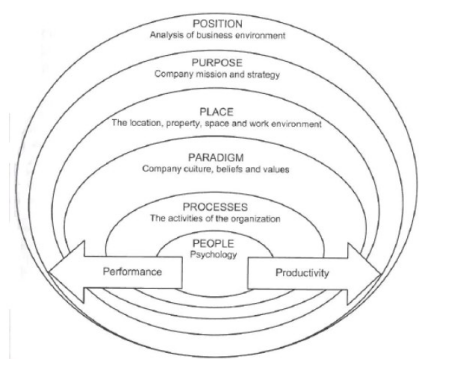
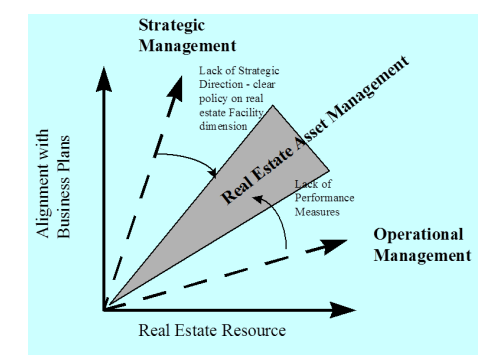
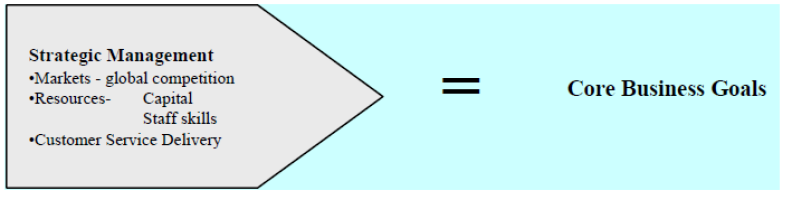
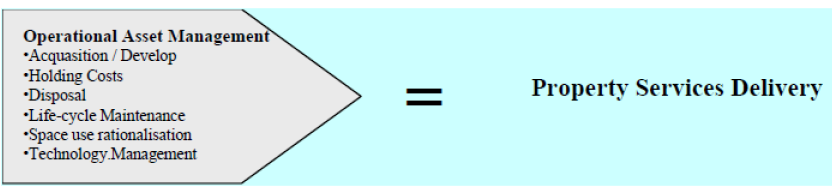
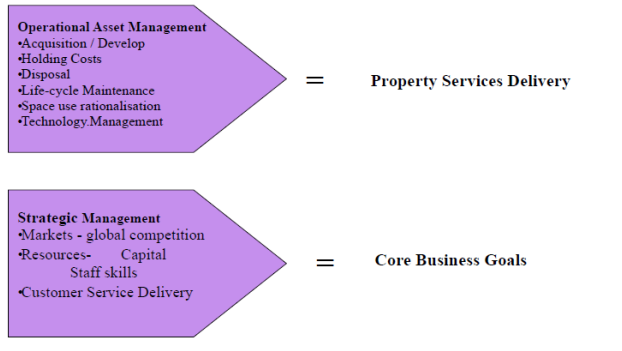
- somewhere between operational strategy and business strategy is facilities management
- need to occupy property, know you have strategic decisions to make
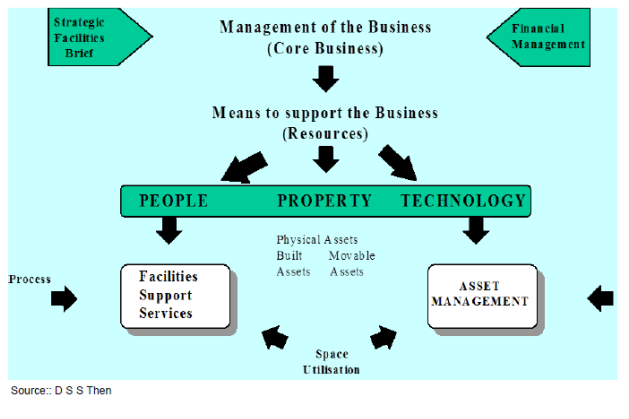
Why do you need CRE?
Property constraints
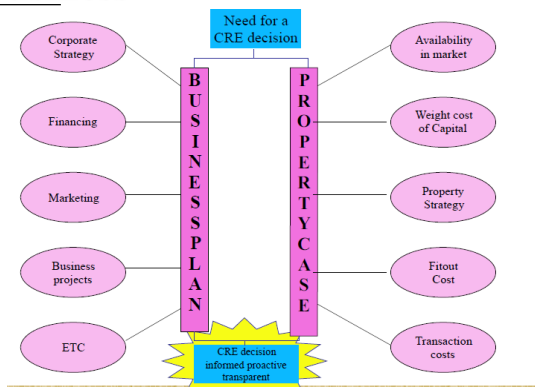
CRE strategic Framework
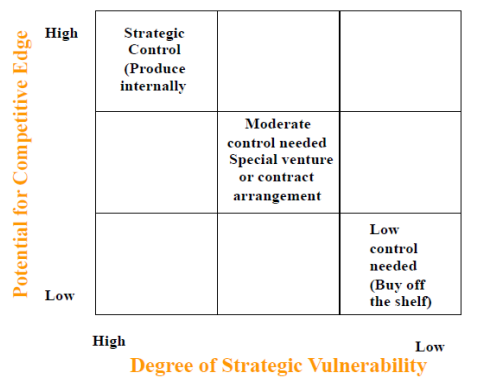
Do you do it yourself or do you outsource it?
High potential for competitive advantage
high degree of strategic vulnerability
- DO IT YOURSELF
If your business is building boats, e.g.
- How much of a competitive advantage would it be to have your own slipping dock?
- High competitive advantage
- If all your competitors had one?
- High Strategic vulnerability
E.g. Macdonalds
- They do not need to be in the prime spot, because people come to them
Important of facilities will decide whether you need to lease or own it
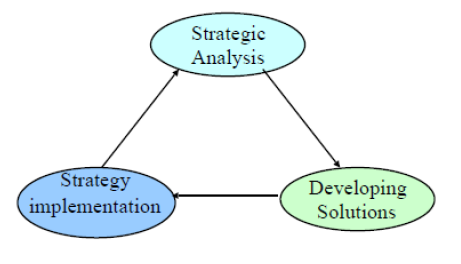
- Developing The Strategy
- Understand the property portfolio
- Understand the organisation and its work processes
- Understand the activities of each work process and their drivers for space
- Understand how the organisation and its processes map onto the current property
- Developing The Strategy
- Understand the external influences
- Understand the likely business scenarios for 1, 2-3 3-5 years
- Model the implications of each scenario
- Understand the workspace drivers
- Model how the existing property can meet needs
- Develop migration strategy
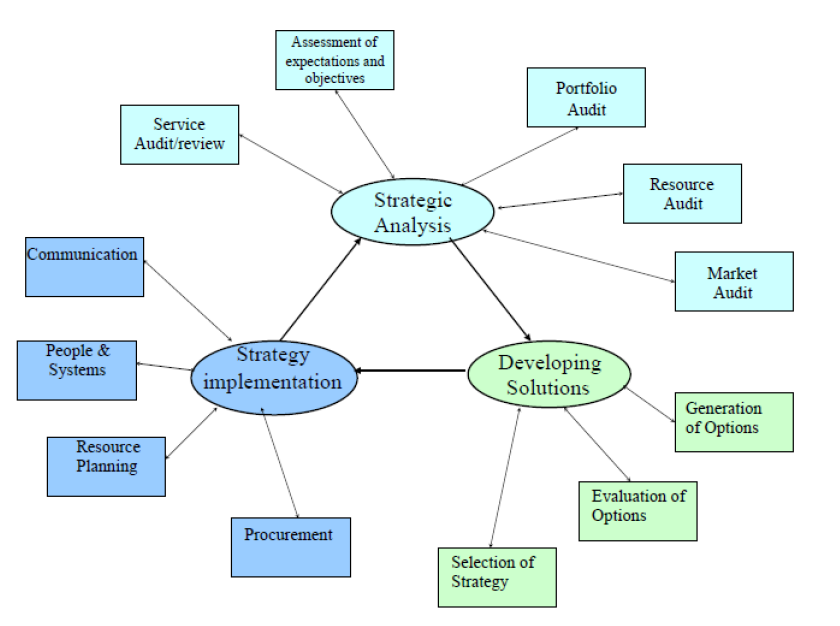
Doing strategic analysis, audit what you currently have
look at the expectations and assessment of of objectives and expectations from the stakeholders that you're trying to support. You audit your current portfolio, What resources? Internally financial etcetera are available. And then you audit what's externally available. You then decide what your solution is. What are your options? Am I to buy, list, sell? Am I to expand? Am I to contract? You evaluate them mathematically financially, and then you select a strategy, then you implement it. You procure it. You in new place coms, new new systems, new people.
-
Maintaining The Strategy
-
Monitor the strategy in use
-
Evaluate its effectiveness
-
Determine and implement corrective action
-
Revise the strategy where required
-
Asset Management Systems
-
ISO 55000:2014 Asset Management
- Factors which influence the type of assets that an organization requires to achieve its objectives, and how the assets are managed, include:
-
Nature and Purpose of the organisation
-
Operating context
-
Financial constraints and regulatory requirements
-
Needs and expectations of organisation and stakeholders
Framework for managing assets
- Good overview of the sorts of things you would want to see if managing assets
CRE strategic Framework
- Lease / Own Strategies
- Financial
- Capital invested - debt / equity
- Cost equilibrium.
- Business Strategy
- Image
- Accommodation Strategy.
Lease vs license
- Ownership, right to use and subject to any capital movements
- Lease, right to occupy in return for a payment
Do I have the money to buy it?
- business image may be impacted when you own or lease
- If it is core accommodation, you would lease it or own in
- flexible arrangement (seasonal period)
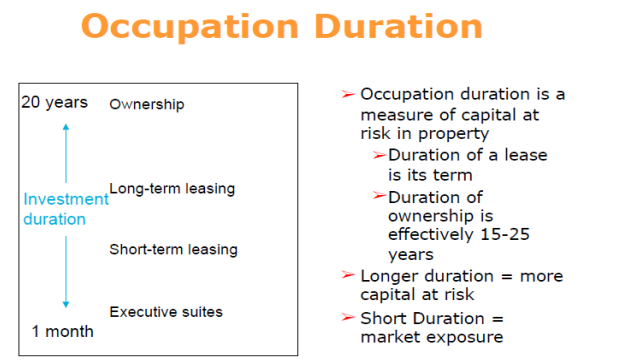
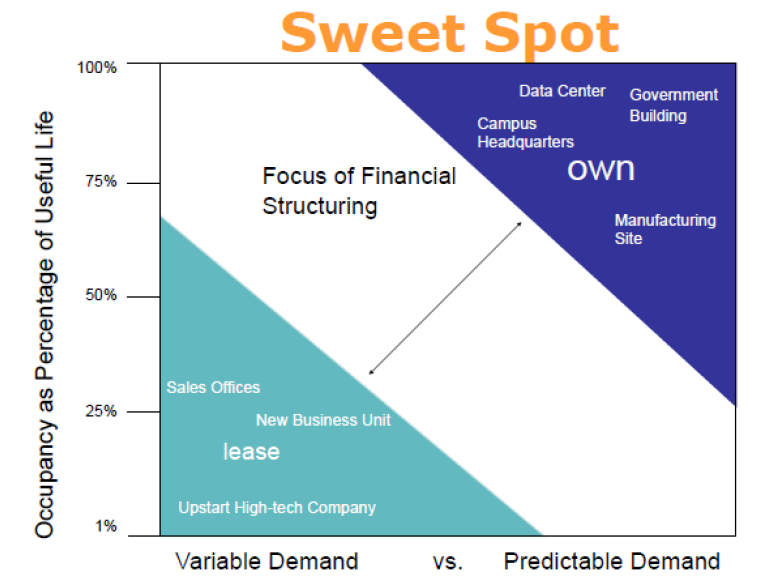
- Useful life, the life of the wasting asset
- e.g. economic life of the asst is 50 years
Variable demand and amount of time using it
Is the demand predictable, and business is predictable?
- predictable for a large percentage of its useful life - own it
- If you are likely to require for a lengthy period of time
Only using for a small percentage of its useful life
use is variable
- lease it
Not sure between the two, do an NPV calculation
- if you are not capital constrained, find which one does better
CRE Strategic Framework
There are Two Decisions Involved: Investing & Financing
- Financial management is comprised of two distinct decisions
- Investing decision
- What assets should we acquire?
- Risk v return
- Financing decision
- How should we pay for the assets?
- Financing cost, capital structure considerations
- Investing decision
- Overall objective is to maximize net present value
Cash Flows
- Ownership has three cash flows
- Initial investment
- Tax benefit (Tax Shield) resulting from depreciation
- Residual value
- Lease has one (sometimes two) cash flows
- Lease payment
- Sub lease payments (receipts)
Holding costs, maintenance costs
- Will have the residual payment at the end of the period
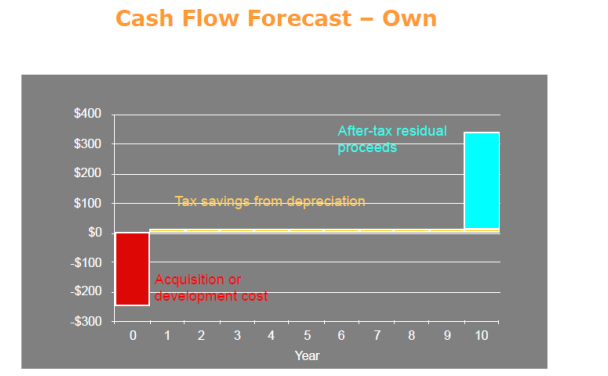
repairs and maintenance costs across the period
- proceeds from sale
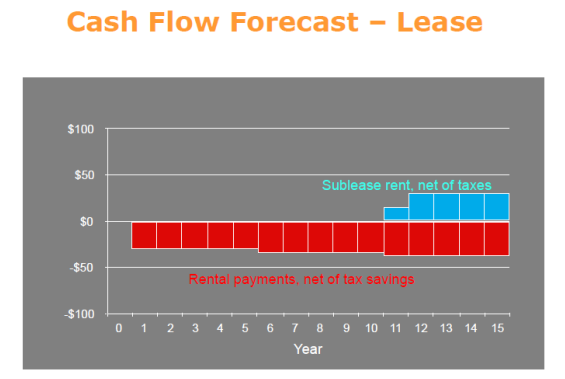
sublet towards the end
Select best discount rate
- Select Best Discount Rate
- Which is the right discount rate to use?
- Cost of debt
- Weighted average cost of capital (WACC)
- Typical real estate investment return
- Hurdle rate (WACC + risk premium)
- Other?
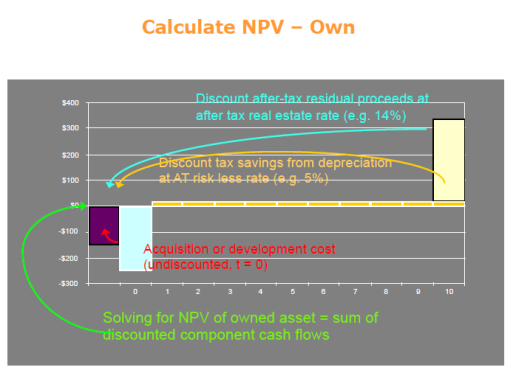
Compare NPVs
- NPV of ownership = ($ X) NPV of lease = ($ Y)
- Select alternative with highest (i.e. least negative) net present value
- Consider Tax implications
- New IAS 17 Leases
Whichever one gives you the best NPV is the one that you choose
Tax considerations
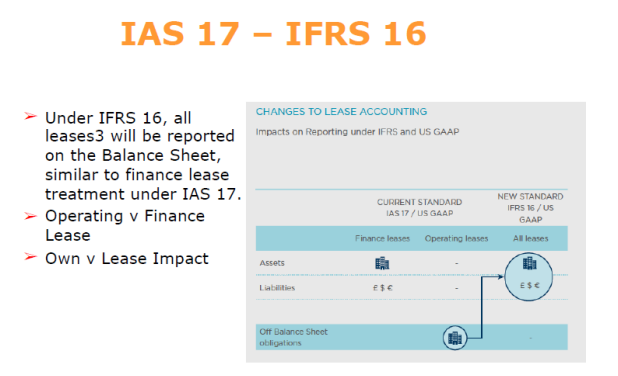
Big chunk of debt in asset ownership on books
- People lease because they don't want to show debt on balance sheet
- New accounting standard - leases treated as a liability now
- Diminishes the attractiveness of leases
- Cannot hide the obligation now