ESG and Real Estate
ESG
- ESG stands for
- Environmental
- Social
- Governance
- It is a framework used to evaluate a company's sustainability and ethical practices.
- No one single globally recognised standard for ESG reporting (International Standards Organisation, Global Reporting Initiative and Sustainability Accounting Standards Board have different standards)
There is no agreed upon framework
- Not clear what you are reading when you review an ESG, different reporting mechanisms
- Measure what you are doing from ESG perspective, and what your are doing in respect to these frameworks
- Massive amount of laws about treating staff, govern businesses, environment, etc
- Not every country has that level of regulatory framework
- A company that subscribes to ESG is a good thing
Environmental (E):
- Focuses on a company's impact on the natural environment.
- Considers factors such as carbon emissions, waste management, resource usage, and climate change mitigation.
- Aims to assess environmental risks, sustainability practices, and ecological stewardship.
- Environment impact
- Impact to environment of suppliers
E.g. plant that decides to use solar
- what environmental impact did the solar manufacturers when constructing the panels?
Social (S):
- Focuses on a company's impact on society and stakeholders.
- Includes aspects like labor practices, human rights, community engagement, diversity and inclusion, employee welfare, and product safety.
- Evaluates the company's commitment to social responsibility and positive societal impact.
Paying fairly, paying the same regardless of sex and background
Governance (G):
- Focuses on a company's internal structure and management.
- Examines board composition, executive compensation, shareholder rights, transparency, and ethical business practices.
- Assesses the company's corporate governance, risk management, and accountability.
- Ensure decisions are made in a rigourous and controlled manner
- Something that investors would like to know about
Why ESG matters to real estate finance?
Risk Management:
- ESG factors can help assess and manage risks associated with real estate investments.
- Evaluating environmental risks, such as climate change impacts or regulatory changes, social risks like community relations, and governance risks like ethical practices can contribute to better risk mitigation strategies and long-term resilience.
- Potentially contributing to environmental impact by development of property
Investor Behaviour:
- Institutional investors, including pension funds and asset managers, are placing greater emphasis on ESG criteria when making investment decisions.
- Real estate developers and owners who prioritize ESG practices can attract capital from investors seeking sustainable and socially responsible investments.
Need to tick a minimum level of ESG
- Some funds specifically want to attract investors who have a minimum ESG criteria
- Show high level of ESG outcomes,
- Specific funds setup to enhance ESG
Property Values:
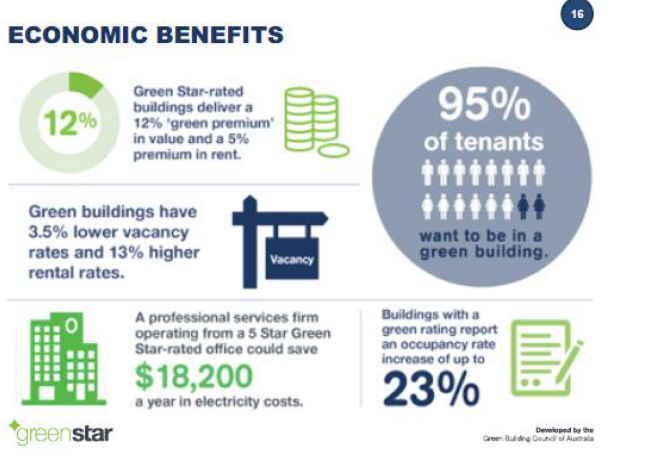
- ESG performance can influence the valuation of real estate assets. Energy-efficient buildings, sustainable design, and green certifications often command higher property values and rental premiums.
- ESG factors may also impact marketability and occupancy rates as tenants increasingly prioritize sustainable and healthy buildings.
- Impact capital costs and operating costs
- Impact value: attract a 'green' premium
- Green premium added for nickel mined in Australia
- Metal in Australia for green versus other sourced metal
When things get tough financially, people are willing to forgo environment & ESG generally
- care more about profitability
- Behaviour that is self-interested,
Regulatory Environment:
- Governments are increasingly incorporating ESG considerations into real estate regulations.
- This can include energy efficiency standards, building codes, disclosure requirements, and incentives for sustainable development. Compliance with these regulations can impact the financial viability and success of real estate projects.
- Put rules on everything
- Make sure it is compliant with social requirements, other requirements
- Assignment, all regulatory reports wouldn't have been done/available 40 years ago
- high level of regulation
Social Impact and Reputation:
- Real estate projects can have significant social and community impacts. ESG practices can promote affordable housing, community development, accessibility, and other social objectives.
- Engaging with local stakeholders and addressing community concerns can enhance the reputation of real estate developers and support long-term success.
- Shutting down a workshop 300km from Rockhampton, 30 employees
- From a real estate perspective it made sense
- Social impact, 30 workers from a town of 40 people, town isn't big enough to justify teachers, retail shops, police, fire station, etc.
- Effected reputation and destroyed community
Long-Term Sustainability:
- ESG considerations align with the concept of long-term sustainability in real estate finance.
- Sustainable building practices, energy efficiency, responsible resource management, and social responsibility contribute to reducing operational costs, improving tenant satisfaction, and mitigating future risks, ultimately enhancing the financial performance and longevity of real estate investments.
Real estate is a large contributor of greenhouse gases
- Financiers care about that
Sustainable Development
Sustainable development is not synonymous with environmental protection
- development implies using a resource
- Environmental protection implies not impacting the environment
Developed country can afford the luxury of inefficient energy
- Western developed, financially secure perspective
- What is Sustainable Development?
- 1987 Brundtland Report
- ‘Sustainable development is development that meets the needs of the present without compromising the ability of future generations to meet their own needs.’
- Comsumption and exploitation without compromising the future
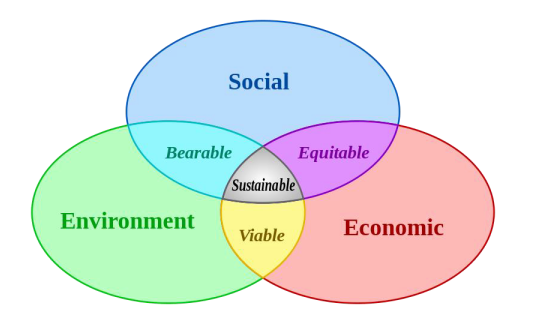
- needs to be economically viable, sustain the environment and social impact
Climate changes and Sustainability
- Buildings worldwide account for 40% of global energy consumption
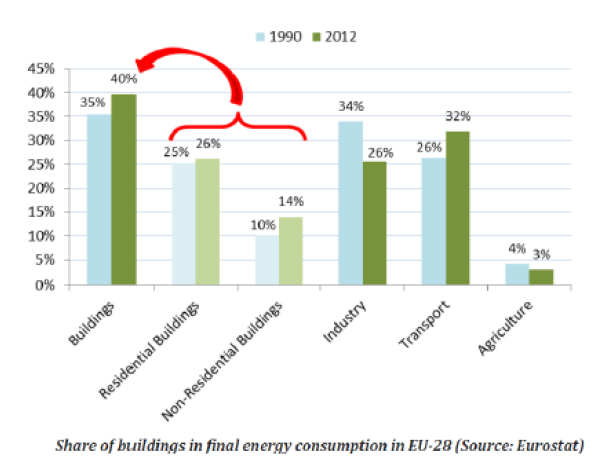
Global context
As real estate developers, how do we price energy
- If the energy consumed produces a lot of CO2, make the energy more expensive
2020 Renewable Energy Targets
- Australia 20%
NFEE (National Framework For Energy Efficiency)
- unlocking the significant but un-tapped economic potential associated with the increased uptake of energy efficient technologies
Jevons’ Paradox - improvements in efficiency of resource use can lead to increased consumption of that resource
- Efficiency gains: Technological advancements and efficiency improvements make the use of resources more efficient.
- Rebound effect: Instead of reducing resource consumption, increased efficiency often leads to increased overall usage of the resource.
- Example: Energy Efficiency
- Improved energy-efficient technologies can lead to lower energy costs per unit.
- Lower costs encourage increased consumption and the adoption of energy-consuming activities previously considered expensive.
- Overall energy consumption may rise despite efficiency gains.
- Jevons' Paradox challenges the assumption that improving efficiency alone can solve resource depletion and environmental problems.
- Coal being used to produce their own steam and power
- If you made the consumption of that resource more efficient, increase of teh consumption of that resource
- Coal boilers became more efficient, ended up burning more coal
- Efficiency gains to do more
- E.g. Lights in your house that cost a lot of money to run, keep the lights off
- Consume to what you can afford, people leave lights on more
Busy road in Parramatta CBD
- Build a freeway, everyone jumps on freeway and efficiencies are lost
Measures to Achieve Sustainable Development
Circle of Blame
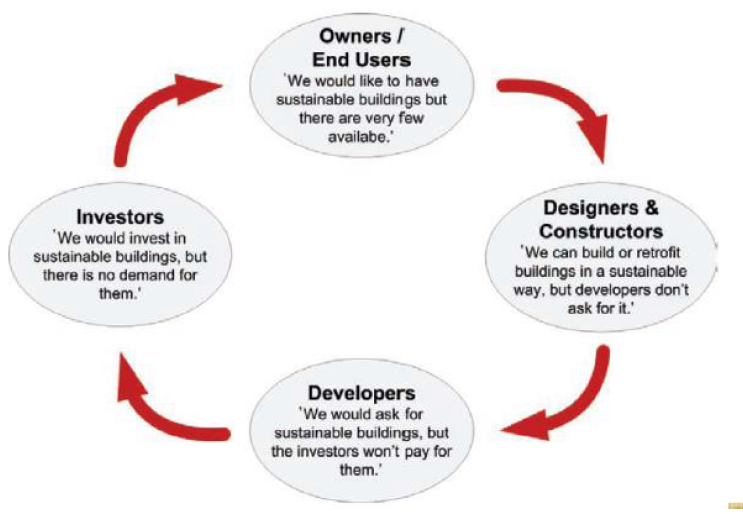
Not going to build something sustainable unless there is use for it
- Do it on spec, and hope the market will be there if the development is energy efficient, or build to highest possible return
- Unless there is a demand for it, developers will not do it
- Government leads by example and incentivise, tax or levy
- Public institutions showing how it can work
High end residential developments are maximum energy efficiency
- People pay a premium for energy efficiencies
Green star
- Green building council of Australia
- 6 star system
- Design and as-built
Rating in design, as built and rating in operation
- 4 different categories of green stars
- 6 star system
- Building and interior design
- Interiors
- Communities
- Doing a master plan community (e.g. Springfield), waste water, etc.
- Performance
- Built the thing and using it, how is the use in terms of environmental impact?
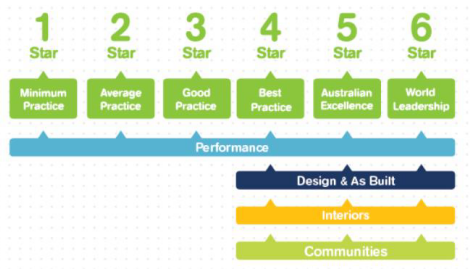
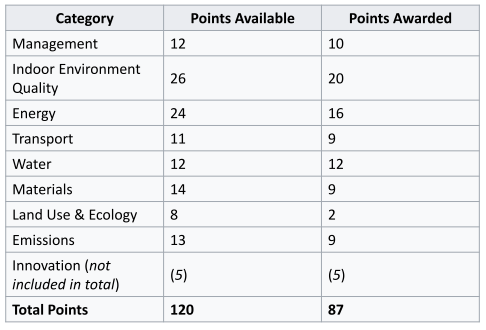
- Work out star rating:
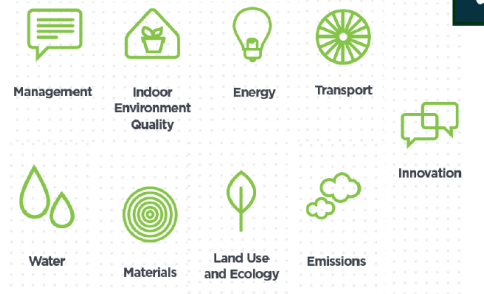
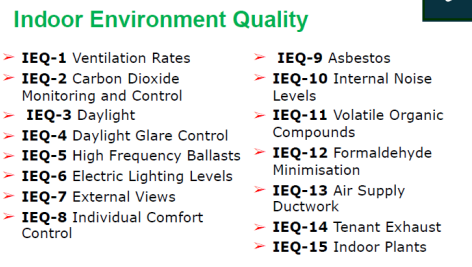
One example, indoor Environment quality
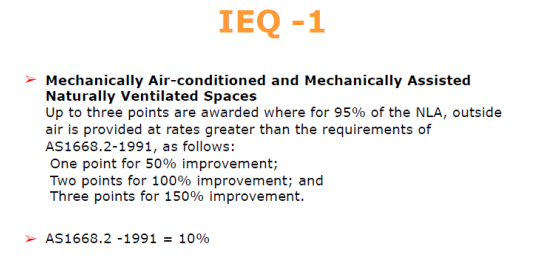
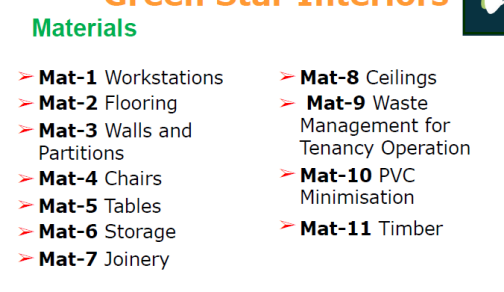
Materials
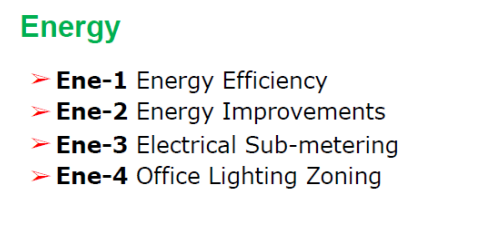
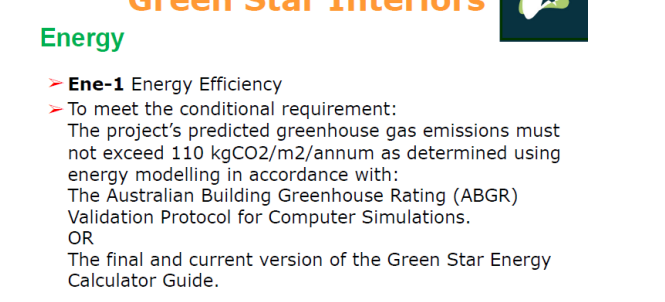
Energy
NABERS
- National Australian Built Environment Rating System
- 6 star system
- Rating
- Performance based
- Environmental impact of occupation
- Measures
- Energy
- Water
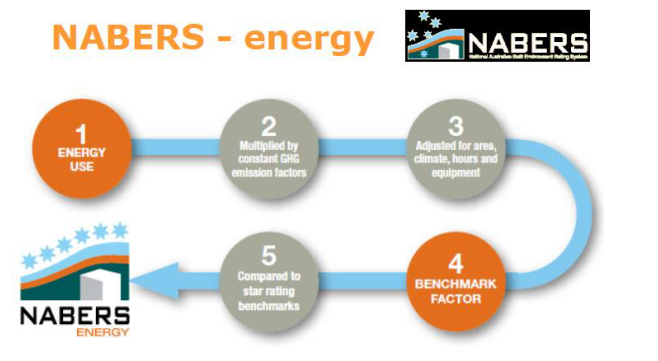
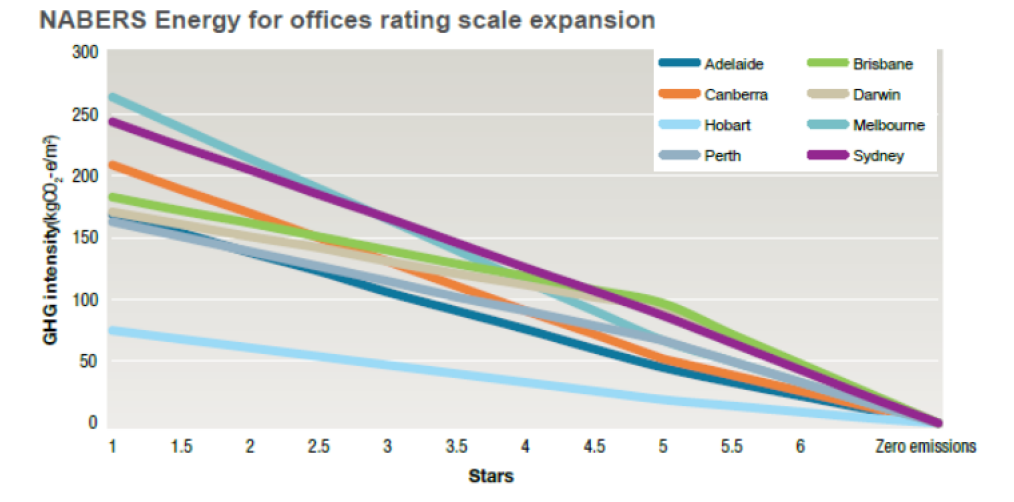
- NABERS building in Sydney vs Tasmania, different factoring assessment factoring in
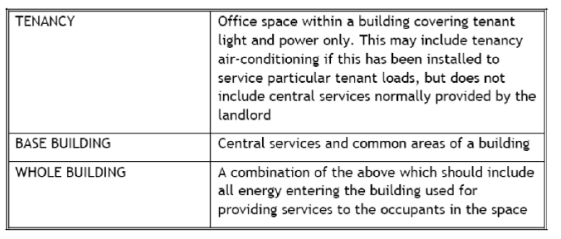
- Could be for tenancy, base building or whole building
- Tenants could use the building inefficiently
Commercial Building Disclosure Scheme
- The aim of the scheme is to ensure that credible and meaningful energy efficiency information is given to prospective purchasers and lessees of large commercial office space
- The scheme requires owners and lessors of commercial office space with a NLA of 1,000m2 or more, to disclose the energy efficiency rating to prospective purchasers and tenants when the space is to be sold, leased or subleased.
- see NABERS all the time in respect to property sale or lease
- Start Date ~ Nov 2010
- From 2011 - disclose a building Energy Efficiency certificate (BEEC)
Council House 2
-
20% of the cost was referable to energy efficiency criteria
-
$11.3 million sustainability features
- purge windows, light harvesting devices, precast ceiling, timber shutters, precast exhaust ducts
- Was done for political reasons
- purge windows, light harvesting devices, precast ceiling, timber shutters, precast exhaust ducts
-
City of melbourne estimates that the long-terms savings from its new council offices in the CH2 builing will pay for the green premium within 10 years. Premium estimated to be about 22% of the construction cost of the building Payback period
-
Estimated in 10 years time the sustainability features will have paid for themselves
-
6 start design rating under Green Star
UQ - Global Change Institute
- 6 start design rating under Green Building Council's Green Star system
- $32 million building
- More than 15 major awards won for the building
- Ranked 34 th in world’s 50 most impressive environmentally friendly university building
- A living building - Global Change Institute - University of Queensland (uq.edu.au)
- Many design features that contributed to 6 Star Green Building Council rating no longer functioning
Green leases
- A ‘green lease’ is a lease between the landlord and tenant which aims to ensure that the ongoing use and operation of the building minimises environmental impacts.
- A ‘green lease’ distinguishes itself from conventional leases in that it incorporates ecologically sustainable development (ESD) principles. These provide a framework under which both landlord and tenant can achieve and maintain energy efficiency and other sustainability goals throughout the lease term
- No standard template for a green lease
- incorporates ESG principles
- Other sustainability goals
- Clarify who is responsible
- Since 2010 there has been a National Green Leasing Policy requirement for all new Commonwealth, State and Territory leases where the office space is more than 2000m 2 and the lease term is more than two years.
- The NGLP sought to generate energy and greenhouse gas savings by increasing the operational performance of buildings within the commercial office
- Applies to states and the Commonwealth
- Building owner will need to understand what a green lease means
Aim of the National Green Leasing Policy
-
Reduce the impact of buildings on the natural environment;
-
Respond to adaptation challenges associated with climate change;
-
Improve the cost effectiveness and efficiency in the use of office buildings;
-
Enhance the health, well-being and productivity for occupants;
-
Demonstrate Government leadership procurement and management of government office accommodation.
-
There is no uniform model green lease that will be appropriate for every commercial premises. Like an ordinary lease, there is no one-size-fits-all model. However components of a green lease can be mixed and matched to suit the objectives and requirements of the parties.
-
A green lease can include information about:
-
WHAT are the environmental measures to be taken under the lease?
-
HOW will the parties cooperate to achieve these measures?
-
WHO will monitor compliance with those measures?
-
WHAT happens if the targets are not met?
- Need to have x level of water consuming, energy and it is above threshold, who bears that cost?
- Practical, set out feature to address environmental issues
Five key elements of Green Leases:
- Target environmental performance standards
- Metering and data reporting requirements
- Environmental management plan
- Building management committee
- Remedial action / dispute resolution regime.
Target environmental performance standards
- NABERS energy rating targets – base building rating and tenant’s NABERS energy rating targets
- Base building rating within 15 months of commencement
- Annual base building rating renewals
- Tenant to obtain “Tenant’s NABERS” rating
- Water consumption - 4 star NABERS Water rating
- Indoor Environmental Quality - Green Star rating (not part of NGLP)
- Metering and data reporting requirements
- Metering
- Building owner to provide base building energy metering and sub-metering
Environmental Management Plan
- The EMP sets out the strategies, actions, activities, and timeframes to undertake agreed improvements and the responsibilities of the Building Management Committee. It facilitates upfront planning and provides clearly articulated responsibilities for all parties.
- Building Management Committee
- The Building Management Committee (BMC) acts as the vehicle for representatives of the government tenant and building owner to meet and discuss strategies, actions and provide recommendations and solutions to achieve and maintain their obligations.
Remedial Action/ Dispute Resolution
- The focus of this Policy is the generation of environmental benefits, not the pursuit of punitive action. This Policy supports a collaborative and non-punitive approach to „prevention and rectification‟ in the case where obligations are not met.
- A Green Lease sets out a clear process for dealing with disputes, rating adjustments and remedial actions that may arise during the lease term.
- Green Lease must incorporate a jurisdiction specific Green Lease Schedule appended to the lease. This will facilitate the specification and delivery of obligations of building owner and government tenant
- Add all these things into a regular lease, is now a green lease
- Will add costs and administration burden