Lecture 13
Exam Revision
- Topic 1: Intro to Behavioral Finance : Introduction to Behavioral Finance and Traditional Finance Theories
- Topic 2: Prospect Theory
- Topic 3: Challenges to Market Efficiency
- Topic 4: Overconfidence and Investors
- Topic 5: Application of Managerial Overconfidence in Corporate Finance
- Topic 6: Heuristics and Biases and Its Implications
- Topic 7: Emotional Foundations and Individual Investors
- Topic 8: Behavioural Explanations for Anomalies
- Topic 9: Behavioral Factors and Stock Market Puzzles
- Topic 10: Behavioural Investing
Topic 1: Introduction to Behavioral Finance and Traditional Finance Theories
Reference: AckertDeaves Chapters 1 & 2
[Part One – Introduction to Behavioral Finance]
- Overview of neoclassical economics
- (1) Preference Relation
- (2) Utility Function and Expected Utility Theory
- (3) Brief Introduction to Behavioural Finance
[Part Two – Foundations of Finance]
- Foundations of Finance II: Asset Pricing, Market Efficiency and Agency Relationships
- (1) Risk and Return Relationship
- (2) CAPM model and Fama and French
- (3) Market Efficiency (brief introduction = > more details in Topic 3)
- (4) Agency Relationships and Corporate Governance
Part One
Neoclassical economics (normative theory)
- Rational preferences
- Completeness
- Transitivity
- Maximise utility
- The Expected Utility Theory of Prospect
- Properties of Utility Functions
- Certainty Equivalents
- Independent decisions based on all “relevant” information
Introduction to Behavioural Finance
- Loss Aversion
- Representative
- Mental Accounting
- Fear of Regret
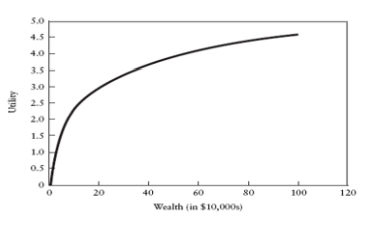
- Introduce neoclassical economics (traditional)
Part Two
Foundations of Finance
- Portfolio Risk & Return
- Security/Portfolio Expected Return & Standard Deviations
- Efficient Frontier & CML
- CAPM Model
- Market Efficiency (more discussed in Lecture 3)
- Agency Relationships & Corporate Governance
- Agency Costs (Direct vs Indirect)
- Some of the foundations concepts in finance
- EMH - need to know
- not in the way of other finance courses, not the same as CAPM or EMH
Topic 2: Prospect Theory, Framing and Mental Accounting
Reference: AckertDeaves Chapters 3
[Part One – Prospect Theory]
- Overview about Prospect Theory
- (1) Risk Aversion vs. Risk Seeking
- (2) Development of Prospect Theory
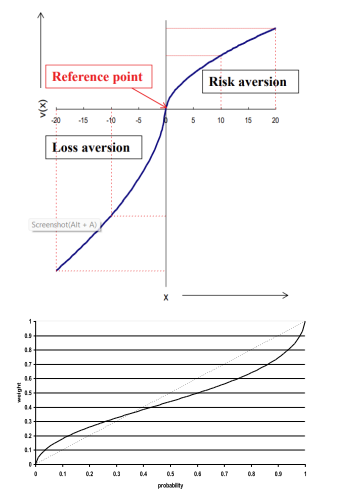
- Prospect Theory Value Function
- The Weighting Function
[Part Two – Mental Accounting]
- Mental Accounting
- (1) Integration vs. Segregation
- (2) Theater Ticker Problems
- (3) Opening and Closing Accounts
- utility function is upper sloping
- reference dependent
- Treat positive versus negative domain differently
Prospect Theory
- Risk aversion vs Risk seeking vs Loss aversion
- Value Function
- Reference dependent
- Risk averse in positive domain
- Risk seeking in negative domain
- Loss aversion
- Weighting Function
- Overweighting low probabilities
- Underweighting medium-high probabilities
- Certainty effect
- Framing & Mental Accounting Effect
- Segregation vs Integration (reference point)
- Silver lining effect & House money effect
- Influence our decision to be less rational
Topic 3: Challenges to Market Efficiency
Reference: AckertDeaves Chapters 4
[Part One – Efficient Market Hypothesis]
- Overview of Efficient Market Hypothesis
- Theoretical foundations and assumptions
[Part Two – Challenges to Market Efficiency]
- Rationales supporting the Efficient Market Hypothesis
- Theoretical Challenges and Empirical challenges
Market Efficiency
- 3 levels of efficiency
- Implications: Better off do passive investing
- Random Walk vs. EMH
- “Prices are right” vs “No free lunch”
- Theoretical Foundations
- Universal Rationality
- Uncorrelated Errors
- Unlimited Arbitrage
- Rationales Supporting Efficiency vs
Effective Trading Rules (Anomalies?)
- Challenges to EMH
- under EMH, universal rationality
- As long as we have unlimited arbitrage, it is ok too
- Have limits to arbitrage, however
Arbitrage
- Triangular Arbitrage
- Limits to Arbitrage
- Fundamental Risk
- Noise-trader Risk
- Implementation Costs
Topic 4: Overconfidence & Investors
Reference: AckertDeaves Chapters 6 & 9
[Part One – Overconfidence]
- Overview about Overconfidence
- Miscalibration / Other Strains of Overconfidence
- Factors Impeding Correction
[Part Two – The Impact of Overconfidence on Financial Decision-making]
- Overview: The Impact of Overconfidence on Financial Decision-making
- Overconfidence and Excessive Trading – A simple Model
- Under diversification and excessive risk taking
Overconfidence
Strains of Overconfidence
- Miscalibration
- Calibration Tests
- Confidence Interval Approach
- Better-Then-Average Effect
- Illusion of Control
- Excessive Optimism
Impact on Financial Decision-Making
- Excessive Trading
- Unfounded belief in own ability to identify companies
- Under Diversification
- Underestimating downside risks
- link with investment decision
- overconfidence - what it really is
- Different strains of overconfidence
- Miscalibrated - mean value and range tests
- Expected value you predict to have
- 95% confidence interval, giving a narrow range indicates you think your answer is correct
Any questions asking about overconfidence
- If the question is not specific about a strain - saying they are saying
- really specific strain - then be specific
- EXAM TIP - asking for more general bias, in particular 'showing' illusion of control e.g.
- Don't give extra assumptions
Impact on decision making
- underdiversification - illusion of control - maybe a bit of miscalibration
- underestimation of the risk that they may encounter
Topic 5: Application of Managerial Overconfidence
Reference: AckertDeaves Chapters 6 & 9
[Application of Managerial Overconfidence]
- Brief Introduction: Application of Managerial Overconfidence
- Capital Budgeting:
- Payback and Ease of Processing,
- Allowing Sunk Costs to Influence the Abandonment Decision,
- Allowing Affecting to Influence Choices
- Managerial Overconfidence
- Investment and Overconfidence
- Can Managerial Overconfidence have a Positive Side?
Managerial Overconfidence
Capital Budgeting
- Ease of Processing
- Loss Aversion (Abandonment)
- Sunk Costs
- Ex-Post Mistake
- Attachment/Involvement
- Affect
Managerial Overconfidence
- Overinvestment
- Unfounded belief in own ability to identify companies
- Higher Sensitivity of Investment to Cashflows
- More Active in M&A
- Too Quick to Start New Businesses
- CEO Overconfidence Not All Negative
- institutional - more knowledgable
- Still exhibit overconfidence but for different reasons
- Managers decision can be affected
- Capital budgeting
- Should act in the best interest of shareholders
- Make decision based on the best approach - may choose the other because it is easier
- Loss Aversion
- Start an investment, do not stop evaluation
- Should not continue, stop/terminate it but do not because of loss aversion
- Take into account sunk cost
- Treat it as the money that you pay
Affects will influence decision making as well
- may choose something suboptimal but may have a positive feeling
Managerial overconfidence
- Tend to overinvest
- Higher sensitivity to cashflows
- Not all overconfidence is bad
Topic 6: Heuristics & Biases
Reference: AckertDeaves Chapters 5 & 8
[Part One – Application of Heuristics and Biases]
- Brief Introduction: Application of Heuristics and Biases
- Perception, Memory and Heuristics
- Familiarity & Representatives and Related Heuristics
- Anchoring; Irrationality and Adaptions
[Part Two – Implications of Heuristics and Biases for Financial Decision-Making]
- Introduction: Implications of Heuristics and Biases for Financial Decision-Making
- Financial Behavior Stemming from Familiarity & Representativeness
- Anchoring to Available Economic Cues
Part One
-
Perception & the Frame
- Primacy vs Recency Effects
-
Heuristics (Mental Shortcuts)
- Type 1 (Autonomic)
- Type 2 (Cognitive)
- E.g. Ambiguity Aversion, Endowment Effect
-
Representativeness
- Conjunction Fallacy (Joint Probability)
- Base Rate Neglect (Bayes’ Rule)
- Hot Hand Phenomenon & Gambler’s Fallacy
- Overestimating Predictability
-
Bias Related to Representativeness
- Recency
- Salience
- Availability
-
Anchoring
- Seems contradicting with Representativeness
- Coarsely Calibrated
- perceptions will effect how we evaluate situations
- different heuristics
- not always influenced by primacy or recency effects
- Time gap in between, more effect by the latency effect
Heuristics
- Mental shortcuts
- not the same as mental biases
- Type 2 heuristics can override type 2 decision
Representativeness
- Two most important is conjunction fallacy and base rate neglect
- Conjunction
- thinking the joint has a higher probability that the base rate
- Base rate neglect
- Conditional probability - forecasting rent e.g.
- Adding new information, influenced and miscalculate the base rate
- Difficult calculations from the course
Hot hand phenomenon
- Really good past performance, high chance they are going to perform good in future
Gamblers fallacy
- complete opposite
Overestimating predictability
- Overestimating the predictability of using one to predict the other
Salience
- What information are we using to represent something else
- More dramatic, going to be in your memory more
Availability
- Easier to recall, effected by that more
Anchoring
- not adjusting
- contradicting representativeness
- Which is more influence by later information
- More effected by new information
- Can suddenly switch to representativeness
Part Two
- Home Bias
- Implied Under Diversificaiton
- Language & Culture
- Information Advantage
- Representativeness
- Good Companies vs. Good Investments
- Anchoring
- Momentum-Chaser vs. Contrarian
- tend to under-diversify our portfolio
- nationally - know language/culture, safer decision
Representatives
- Tend to think good companies are good investments
- Good management characteristics, making good products
- Should already be reflected in the price
- Good companies does not mean they are good investments
Momentum anomalies
- Look at momentum,
- see something increasing, believe it is going to decrease
Topic 7: Emotional Foundations and Individual Investors
Reference: AckertDeaves Chapters 7 & 10
[Part One – Emotional Foundations]
- Brief Introduction: Emotional Foundations
- The Substance of Emotion
- Cognitive Antecedents; Intentional Objects, Physiological Arousal; Physiological Expressions; Valence; Action Tendencies
- A Short History of Emotion Theory
- Evolutionary Theory
- The Brain / Emotion and Reasoning
[Part Two – Individual Investors and the Force of Emotion]
- Brief Introduction: Individual Investors and the Force of Emotion
- Is the Mood of Investor the Mood of the Market / Pride and Regret
- The Disposition Effect (Important)
- House Money / Affect
Emotions
-
Substance of Emotion (6 of them)
-
History of Emotion Th
- Evolutionary Theory
-
The Brain
-
Emotion & Reasoning
- Phineas Gage & Elliot
-
Emotion is not all Bad
-
Pride & Regret
-
Disposition Effect
- Tendency to sell the winners too early and hold on to losers too long
- Explain using Prospect Theory & Mental Accounting
-
Sequential Decisions
- House Money Effect (Winning)
- Snake-Bit Effect & Break-Even Theory (Losses)
-
Affect
- Six things to meet an emotion
History of emotion theory
All treated as a conscious response
Evolutionary theory treated differently
Communicate more effectively
- Can be a reaction
NOT TESTED ON BRAIN
Frontal lobe effecting emotion
Emotions help you make decisions and negotiate better as well
Pride and regret
- Linked to loss aversion
Disposition effect
- Emotional side, because of pride and regret
- tendency to sell winners early and hold onto losers
- risking seeking and risk aversion aligning with prospect theory
Sequential decisions
- contradiction with prospect theory
- Don't have a proxy to identify sequential decisions
Snake bit effect
- Loss now, dont want to lose more
Break-even
- more risk-seeking to regain the losses
Topic 8: Behavioural Explanations for Anomalies
Reference: AckertDeaves Chapters 13
[Behavioral Explanations for Anomalies]
- Brief Introduction: Behavioral Explanations for Anomalies
- Earnings Announcements and Value vs. Growth
- What is behind lagged reactions to earnings announcements
- What is behind the value advantage
- What is Behind Momentum and Reversal
- Daniel -Hirshleifer -Subrahanyam Model
- Grinblatt -Han Model and Explaining Momentum
- Barberis -Shleifer -Vishny Model and Explaining Momentum and Reversal
- Rational Explanations
- Important Risk Adjustment
- Fama-French Three Factor Models/Factor Zoo – Tutorial
Anomalies
- Value Premium
- Mistakes of Judgment
- Agency Considerations
- Momentum & Reversal
- DHS Model (Reversal)
- GH Model (Momentum)
- BSV Model (Momentum & Reversal)
- Rational Explanation
- Inappropriate Risk Adjustment
- Fama-French 3 Factors Model
- Factor Zoo Concern
- Value firms outperform growth firms
- Value firms tend to sell at a cheaper price
- How do you know they are undervalued?
- Doesn't work with traditional model
Mistakes on Judgement
- Error in expectations
- Growth stocks will perform a lot better
- representativeness
- Talking about portfolio performance in general
Agency
- growth stocks portfolio for agency issue
- easier to explain for investors
- Value stocks to realise returns takes longer
Momentum and reversal
- Momentum is the underreaction
- reversal is the overreaction
- DHS - overconfidence
- Calculations, rational investor will predict the price
- GH
- Not adjusting reference point quickly enough
- Reference point is not adjusting quick enough to fundamental value
- Underreaction, not to the fundamental because the reference point is not changing
- Do not worry about big equations, but understand how it works
BSV
- Overreaction and underreaction
- Even though share price should be random walk, cannot predict future
- Believe market is in regime 1 or 2, changing or persistent
- belief effects reaction to past earning
- In regime 1, underreact to past earning signals
- Underreact to new information
- Regime 2, overreact - positive is going to continue
Factor Zoo
- Other things included
- Include all different factors (over 300 in some model)
- Really identifying new factors,
Topic 9: Behavioural Factors & Stock Market Puzzles
Reference: AckertDeaves Chapters 14
[Behavioral Factors and Stock Market Puzzles]
- Brief Introduction: Behavioural Explanations for Stock Market Puzzles
- Equity Premium Puzzle
- The Equity Premium
- Why is the Equity Premium a Puzzle?
- What Can Explain This Puzzle?
- Real-World Bubbles
- Experiment Bubble Market
- Design of Bubbles Markets
- What can we learn from these experiments?
- Excessive Volatility / Markets in 2008
Puzzles
- Equity Premium Puzzle
- Extreme Risk Aversion (Rational)
- Ambiguity Aversion (Behavioural)
- Myopic Loss Aversion (Behavioural)
- Bubbles
- Greater Fool Theory
- Excessive Volatility
- Overreaction
- Recency Effect
- Equity earns higher returns for given risk level
- investors have to be extremely risk averse
- Behaviour averse and ambiguity averse
- Don't want to engage in something that we don't have some degree of control
- More reluctant to join
Myopic
- more frequently you evaluate, to more risky it appears
Bubbles
- False belief in fundamental stuff
- Price continue to increase - more unrealistic
- greater fool theory, people jumping in and pushing the price further away
- Investors more experienced, more motivated and can disappear quicker
- Short selling will make bubbles disappear faster as well
Excessive volatility
- Public information effects market price
- market is more volatile than what the market says
- Overreaction
- Growth rate, be only for a short period of time
- Treat that as a permanent change
- overreact to negative or positive news
Recency effects
- rely on new information too much
- Causing overreaction to current information
Topic 10: Behavioural Investing
Reference: AckertDeaves Chapters 19
- 10-1: Anomaly Attenuation, Style Peer Groups, and Style Investing
- 10-2: Refining Anomaly Capture:
- Refining Value Investing using Accounting Data
- Refining Momentum-Investing using Volume
- Momentum and Reversal (Value)
- 10-3: Multivariate Approaches
- 10-4: Style Rotation
- 10-5: Is It Possible To Enhance Portfolio Performance Using Behavioral Finance
- Early Evidence
- What is Behavioral Investing
Puzzles
-
Anomaly Attenuation
- Anomaly dissipation is expected in efficient market
-
Peer Group
-
Style Investing
- Style Tilting vs. Style Rotation
-
Refining Value Investing (Accounting Data)
-
Refining Momentum Investing (Volume)
-
Momentum & Reversal
- Term Structure & Consistency
-
Momentum & Value
-
Multivariate Approaches
-
Can Behavioural Finance Enhance Portfolio Performance?
- No Conclusion
Anomalies
- Not behaving the same as EMH
- Should use it to capture profits
Peer group Evaluation
- Based on strategies - linked to style investing
- Should still diversify
- Tilting, more general - add slightly more in value firms
- rotation, more aggressive, based on short term evaluation
Refine value investing
- Simply using accounting data with F-score
Momentum
- Capture momentum cycle, capture the timing to enter/buy stock
- Capture using volume
Momentum and reversal
Momentum and Value investing
- Do not see these effects, capturing different things, small portfolio capturing both criteria
Multivariate
- look at all the factors
- separate into five categories, found that we can outperform the market
- momentum, value and volumes are the three values that are most inportant
Does behavioural finance actually work?
- not providing strong evidence suggesting otherwise
Final Exam
- Final examination will be held centrally by the University at the specified time. The final exam will be a face to face on campus exam.
- There is NO formula sheet attached to the exam
- Reading: 10 minutes
- Duration: 120 minutes
- Format: Short answer, Short essay, Problem solving
- Task Description: The final assessment will be based on all materials covered in the course (from Topics 1-10). The exam includes short answers, short essays, and problem-solving questions. No MCQ
- need to know how to apply that in a scenario
How to Prepare for the Exam
- Go through the slides in detail (including examples)
- Practice lecture examples, tutorial questions, & practice exam and try to get a deep understanding of the examples and questions.
- Read the reference chapters of the textbook and other references (for the relevant content)
- It is more important to understand the concepts and know how to apply them, rather than simply memorising the definitions (won’t give you full marks)